
Underwater Videography Course
You are planning to buy an underwater camera and make videos of your amazing underwater adventures.
You already have a camera but you are not satisfied with your videos.
You started reading and watching online but it`s either too simple or too complicated, you are not happy.
This is the right course for you.
Camera: GoPro 11
Firmware: GoPro Labs
Lens: INON UFL-G140 SD semi-fisheye converison lens
Lights: DivePro G18 Plus
Software: Adobe Premiere Pro, GoPro Player
Video: 4K HEVC MP4, 120 fps
Audio: AAC, 48 kHz stereo
What to expect
-
![]()
Part 1 - Online Classroom
Day 1:
Section 1 - Underwater Video Equipment
Section 2 - Composition and Camera Techniques
Section 3 - Introduction to Digital Video
Day 2 & Day 3 :
Section 4 - Editing
Day 4:
Section 5 - Sharing and Distribution
Section 6 - Underwater Techniques
-
![]()
Part 2 - Practical Application
Day 5
Section 7 - Underwater Workshop 1 (2 dives)
Day 6:
Section 8 - Underwater Workshop 2 (2 dives)
-
![]()
Part 3 - Workshop
Day 7:
Section 9 - Editing Workshop

What’s inside
Section 1 - Underwater Video Equipment
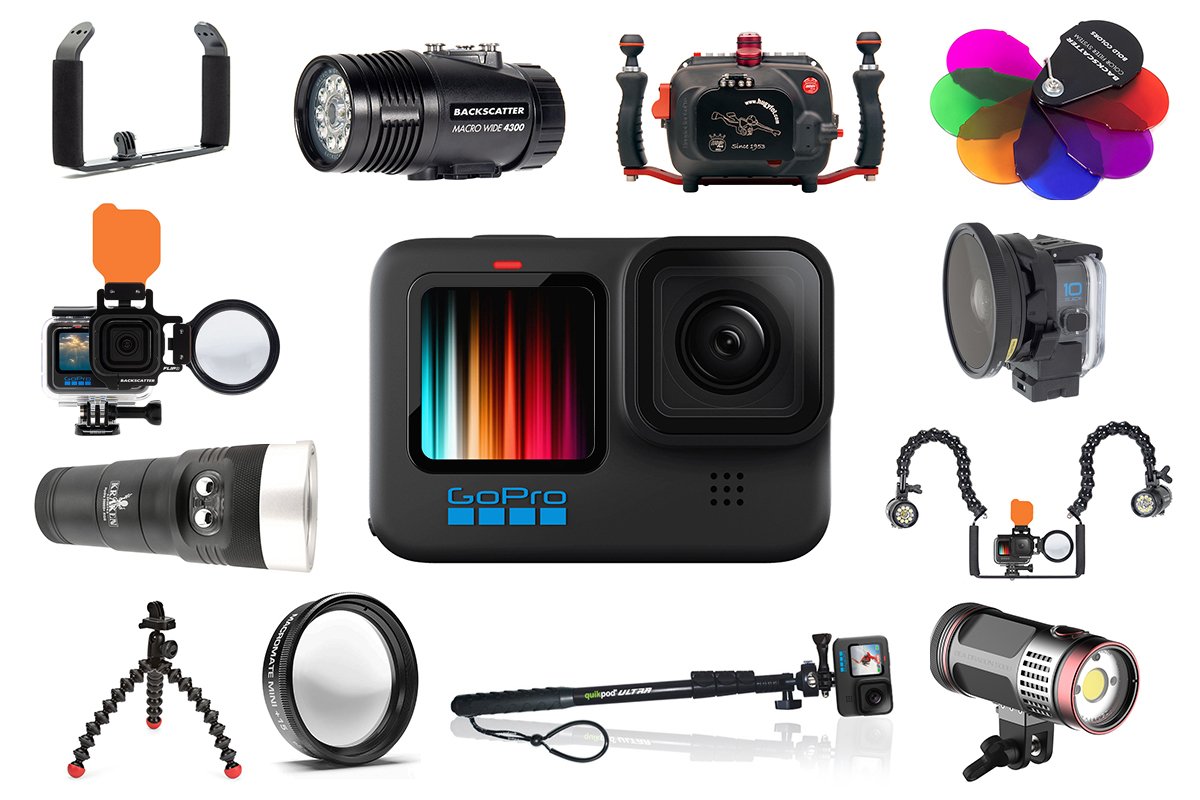
This section starts with GoPro and DJI camera designs, their purpose, capabilities, features and their underwater housings. You will learn how these action cameras are different from Pro Video cameras, advantages and disadvantages. In this section, you will also learn underwater lenses, video lights, filters, system trays and rigs, how to control your and your equipment`s buyoancy when shooting video and you will learn the camera settings.
-
Camera
GoPro (features, models)
DJI (features, models)
Underwater Housing
Stabilisation, SDR, HDR
Action camera vs DSLR, mirrorless or Pro Video cameras
Lenses
Action camera in-body lens
Wet lenses (Wide, Macro)
Video Lights
Lumen, CRI, RA
Beam angle
LED Types
Video Light vs Flash Light
Filters
Common Video Filters
Underwater Fiters
Handling
Camera tray and rig
Underwater Tripod
Buoyancy Control
Fixed volume floating arms
Flexible inflatable equipment
Camera Settings
GoPro & DJI
GoPro Labs software
Section 2 - Composition and Camera Techniques
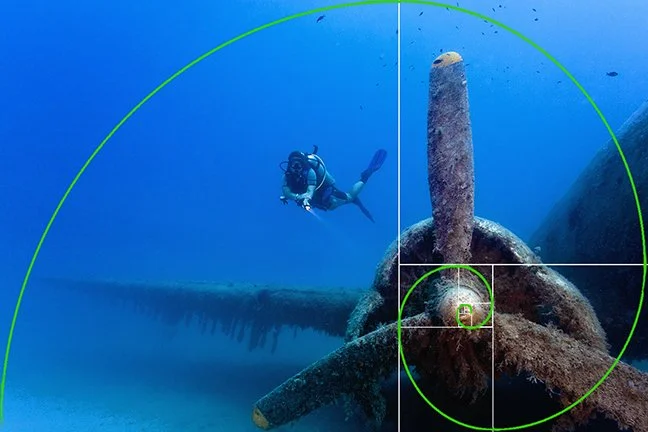
You will learn how to create compositions for your viewers to enjoy your videos most. In additon to basic composition, you will learnd additional techniques, how to frame the objects, create the scene and how to move your camera in different styles properly to create wow effect.
-
Framing Techniques
Rule of Thirds
Symmetry
Leading Lines
Negative Space
Foreground & Background
Camera & Light Angles and Shots
Eye-Level
High Angle
Low Angle
Close-up
Wide Shot
Stationary
One vs Two Light Sources
More than two light sources
Light angles and positions
Movement Techniques
Panning
Tilting
Tracking
Zooming
Dolly Zoom (Vertigo Effect)
Additional Considerations
Lighting
Color
Purpose
Multi camera recording & editing
Section 3 - Introduction to Digital Video
This section starts with explaining what digital video is and how it is different from a series of pictures and traditional analogue video. After the introduction, you will learn light, color, resolution, focus and sharpness, motion, playback and streaming, encoding and decoding, file formats, device connections and digital audio basics.
-
Introduction to Digital Video
What is video, analog video and digital video?
How and why are they different?
Digital basics, bit and pixel.
Light
Brightness, Contrast, Gamma, Luminance, Alpha Channel, ISO
Color
Hue, Color, Saturation, Vibrance
White Balance
Color Temperature, Tint
Color Space and Color Gamut
RGB, sRGB, Rec.709, Rec.2020, Rec. 2100, DCI-P3
Color Depth
8-bit, 10-bit, 12-bit
Chroma Subsampling
YUV 4:2:0, 4:2:2, 4:4:4
Formats
Resolution
SD, HD, Full HD, 4K, UHD, 8K
Aspect Ratio
Golden Ratio, 1:1, 3:2, 4:3, 16:9, 8:7
others : 1.85:1, 21:9
Motion
fps 24/30/50/60/120/240
Playback & Streaming
Data Flow
Bitrate (kbps, Mbps)
Encoding & Decoding
GOP
Type of frames in GOP
Long GOP, All Intra
Compression
H.264, H.265 (HEVC)
Codecs
Standard video codecs
H.264, H.265 (HEVC), VP9, AV1
Standard audio codecs
MP3, AAC, FLAC
Intermediate (Mezzannine) codecs
Quicktime, Apple ProRes, Cineform
Social Media Formats
YouTube, Instagram, Vimeo
Section 4 - Editing
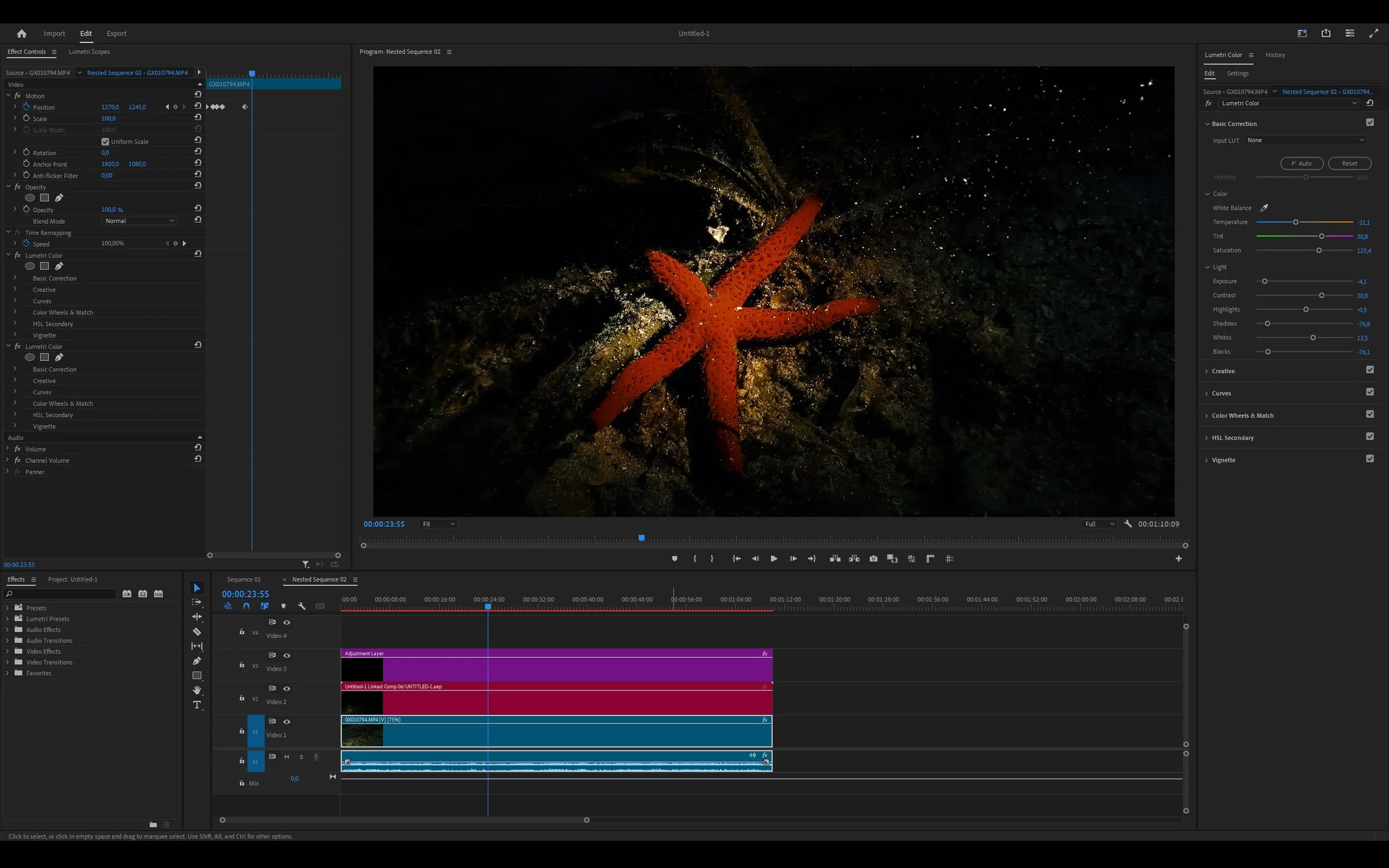
In this section, you will start learning how to edit your videos on your computer. You wil llearn editing basics, tools and techniques for achieving best picture quality and compoaition. In addition to editing, at the end of this section, you will be able to decide which hardware and software is suitable for your needs and make consciuos decisions for your best interest and budget.
-
1. Why is editing necessary?
What is a real image?
How is the image created in the camera?
How do we perceive and see the image?
How do we see the image on different devices and screens?
Why is editing absolutely necessary?
2. Computer Hardware & Software
Which PC Hadware?
Motherboard, CPU, RAM, GPU, SSD, Case, Fans and AIO Cooling, Liquid Cooling, Workstations
Which monitor / display?
Which OS?
Windows
Linux
Which NLE?
Adobe
Premiere Pro, Media Encoder, After Effects, Auditon, Rush
Da Vinci Resolve & Studio
Other Useful Software
Google Gemini AI
Topaz Labs
3. Editing Basics
Workflow
Import, Cut, Edit, Render, Export
4. Editing Concepts
Color and Lighting
Levels
Sharpness
Unsharp Mask
Cropping
Stabilisation
Noise Reduction
4. Advanced Editing
Video Effects
Video Transitions
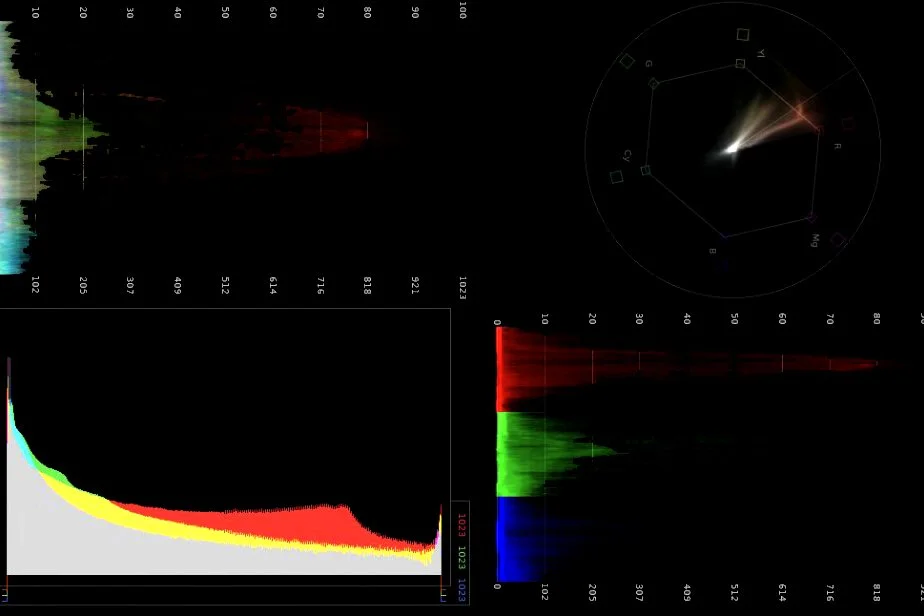
Lumetri Scopes
Adding Graphics
Using After Effects for cleaning spots or objects (Content Aware Fill)
5. Adding Audio
Adobe Premiere Pro - Essential Sound
Adobe Audition

Section 5 - Storage, Sharing and Distribution
You will learn YouTube and Instagram content requirements for upload and streaming. This is very important because if you don`t meet requirements for your video then it may either not look good or even not play at all. You also have to be making consciuos decisions for your target audience and devices during the export process before uploading your content. You will also learn about Search Engine Optimisation which will help you to move your video up in the search and make it easier to find. Videos require huge amount of storage and you also need to backup your content. You will learn what options are available and which methods are best for cost effective and efficient storage solutions.
-
1. Video Platforms
YouTube
Instagram
2. Optimisation
Optimise video for web & TV
Render settings
Export settings
3. SEO
What is Search Engine Optimisation?
Understand basic SEO for video
How to make your videos easy to find
Recommendations
4. Storing Digital Media
Cloud Storage
Physical Disks
Backups
Section 6 - Underwater Techniques
Congratulations!
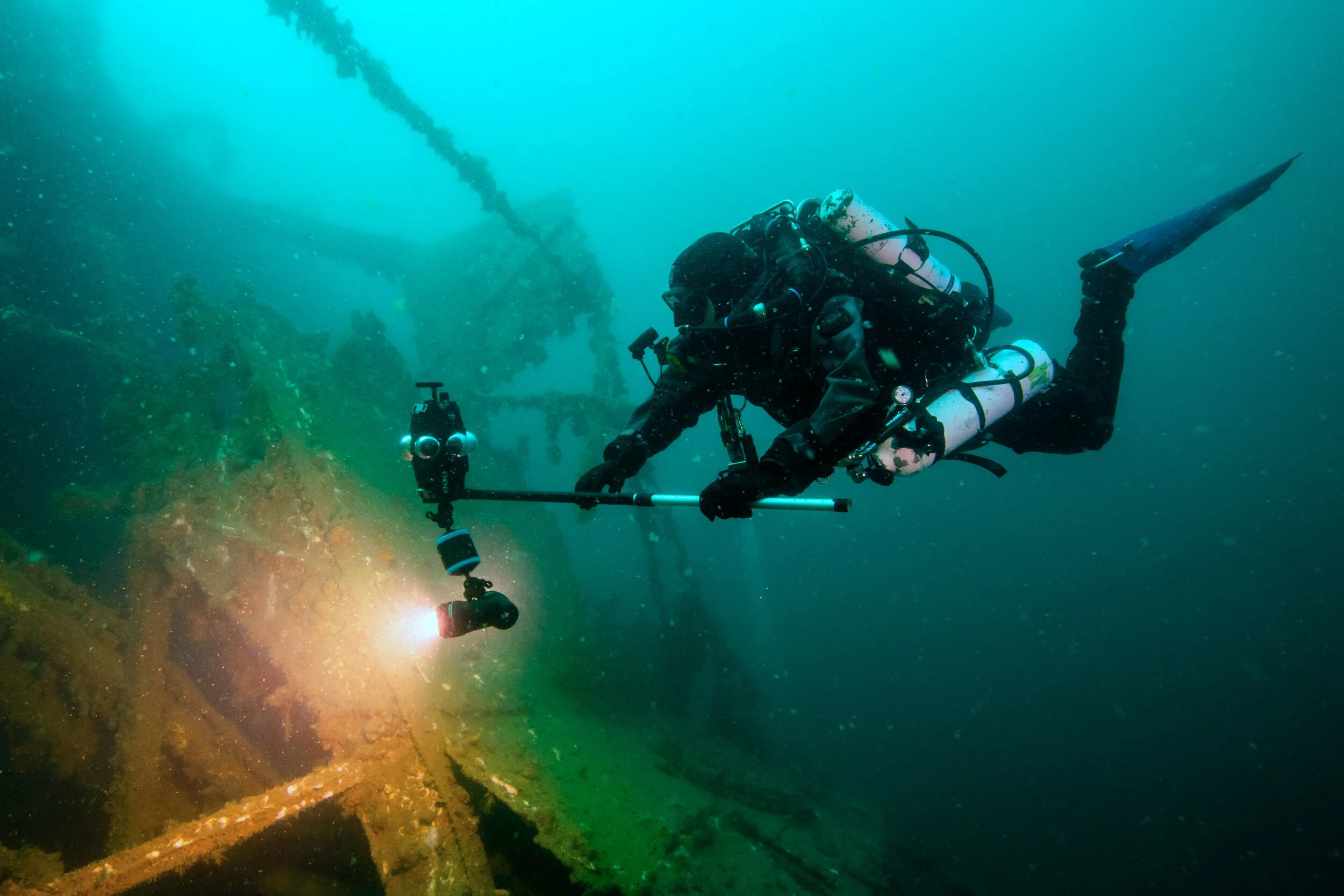
You will learn best settings for your camera and equipment specific to your dive. You will practice finning techniques for different camera movements, this will also help you atabilise your body and your camera easily even if you are shooting in a current. You will learn resposnible diving for protecting the environmnet and marine life and finally how to respond to common problems and emergencies when you have your camera and equipment with you.
-
1. Camera Setup
Presets and modes
Settings
Grids on the screen
Aspect ratios
White balance
GoPro Labs settings
BCD connection and release mechanisms
2. Buoyancy Control
Your own buoyancy
Your equipment`s buoyancy
What to do if there is current?
How do you shoot during a drift dive?
Finning Techniques
4. Changing Lenses Underwater
5. Video Light Adjustments
6. How to use an underwater tripod?
7. Selfie Stick - creative advantages
8. Marine life
Reactions to lights, you and your camera
How to best approach and frame different marine life?
Responsible diving and caring
8. How to handle Underwater Emergencies
Section 7 & 8 - Underwater Workshop
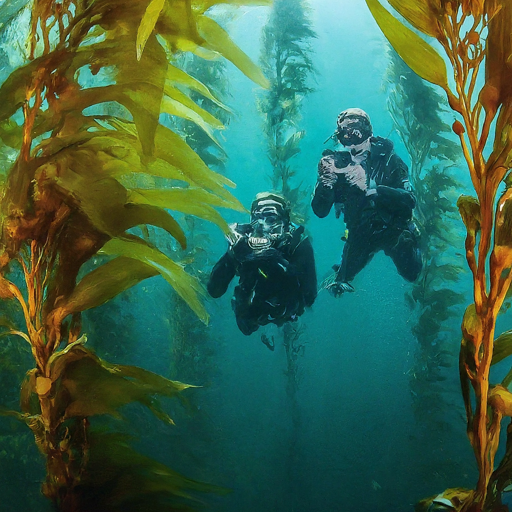
We will make a total of 4 dives over 2 days. Dives will be planned based on your diving certificate level and experience, location and your equipment.
During these dives, you will find the chance to apply everything you learned in this course with your instructor.

Section 9 - Editing Workshop
Congratulations!
You`ve come this far and this is your final day of the course.
You will edit and create a final video using your recordings made during underwater workshops. You will also find the chance to share and distribute your video on your social channels and with your family and friends.
Frequently asked questions
-
Scuba diving requires a minimum level of health and fitness. Chronic health conditions, certain medications and/or recent surgery may require you to get written approval from a physician before diving.
Avoid disappointment, download and review the Diver Medical Form to ensure you won’t need a physician’s approval to dive before enrolling in a scuba course. Instructors, divemasters and dive shop staff are not physicians and should not be asked for medical advice; only medical professionals can give medical clearance to dive.
-
There are no course prerequisites.
-
PADI standard is minimum 10 yrs. old. Local regulations may vary. For example, in Turkey, you have to be minimum 14 yrs old to submerge with scuba equipment. This includes Discovery Scuba Diving.
-
You just need to bring your swimming suit and a towel for diving .You will be provided all the equipment for diving.
You will need your camera, devices and your computer during online classroom sections and the final editing workshop day.
-
Please see available slots here.
The total duration of the ourse is 7 days.
-
Please see available dive center locations here.
Underwater Videography Course Fees
Part 1 Online Classroom
4 days
Day 1, Day2, Day 3, Day4
€599
Part 2 Practical Application
4 dives over 2 days
Day 5, Day 6
€399
Part 3 Workshop
1 day workshop
Day 7
€299
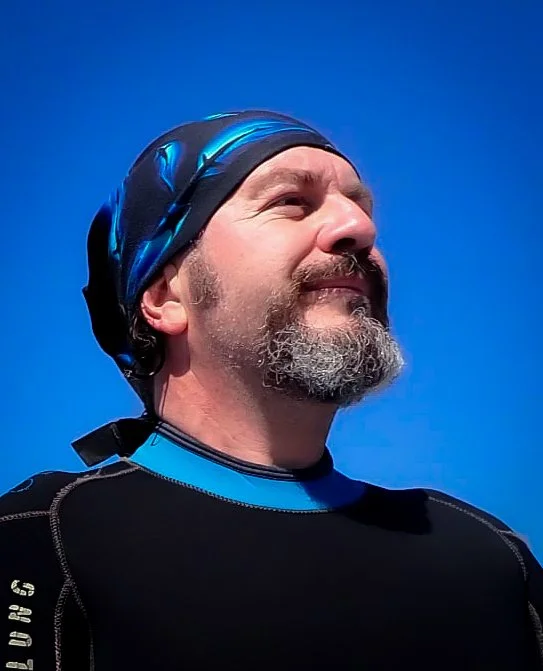
Meet your instructor
After graduating from Middle East Technical University Electric & Electronics Engineering Department in Turkey, I started my career as a Software Engineer & Researcher in Turkish National Scientific & Technical Research Council.
After a few years, I started a new job in one of the major digital TV manufacturers in the world, Vestel Electronics. Digital Video Broadcasting was replacing analog TV in Europe and the rest of the world. We were right at the heart of digital video boradcasting revolution.
I worked at Vestel for 20 years under many different roles and titles; as software engineer, manager and executive. I spent 12 years of this time in Vestel`s digital TV software company Cabot Communications in Bristol, UK.
Long story short, digital video software, hardware, broadcast, streaming, consumer devices and displays with commercial aspects of digital video software and technologies are my expertise.
With the advancement of internet, streaming and social channels, digital video became available everywhere on every device on demand.
I first tried scuba diving in 2004 and quickly became a PADI Open Water Diver. Since then, diving, photography and video have been my passion always and everywhere.
Now, I am a PADI Instructor. I love diving and teaching.
Suphi Cenk Agar
See my LinkedIn profile here.
Why video, not photography, underwater?
This is a personal choice.
I bought my first camera in a flea market in Ankara in 1996. It was a Zenit 35mm film SLR. I travelled more than half of my country on a motorcycle taking pictures with this camera. I now own a wide range of Canon equipment and I’m still taking photos on land, I still love it.
I feel I could show underwater world and marine life better with video than with photography. An octopus changing colors, moving arms and changing shapes, a spanish dancer moving in mid-water or an anemone fish talking to each other - yes they talk and you can make a video of them - is very interesting to me and new to most people .It is impossible to show these with photography.
Why an action camera?
The total cost of an underwater action camera system is significantly low when compared to an underwater high end or professional video system.
Replacement costs are also significantly low when new technologies become available.
Action camera technologies and PC hardware & software made significant technological advancements.
Now action cameras are quite capable of producing amazing high quality videos with a significantly smaller budget.